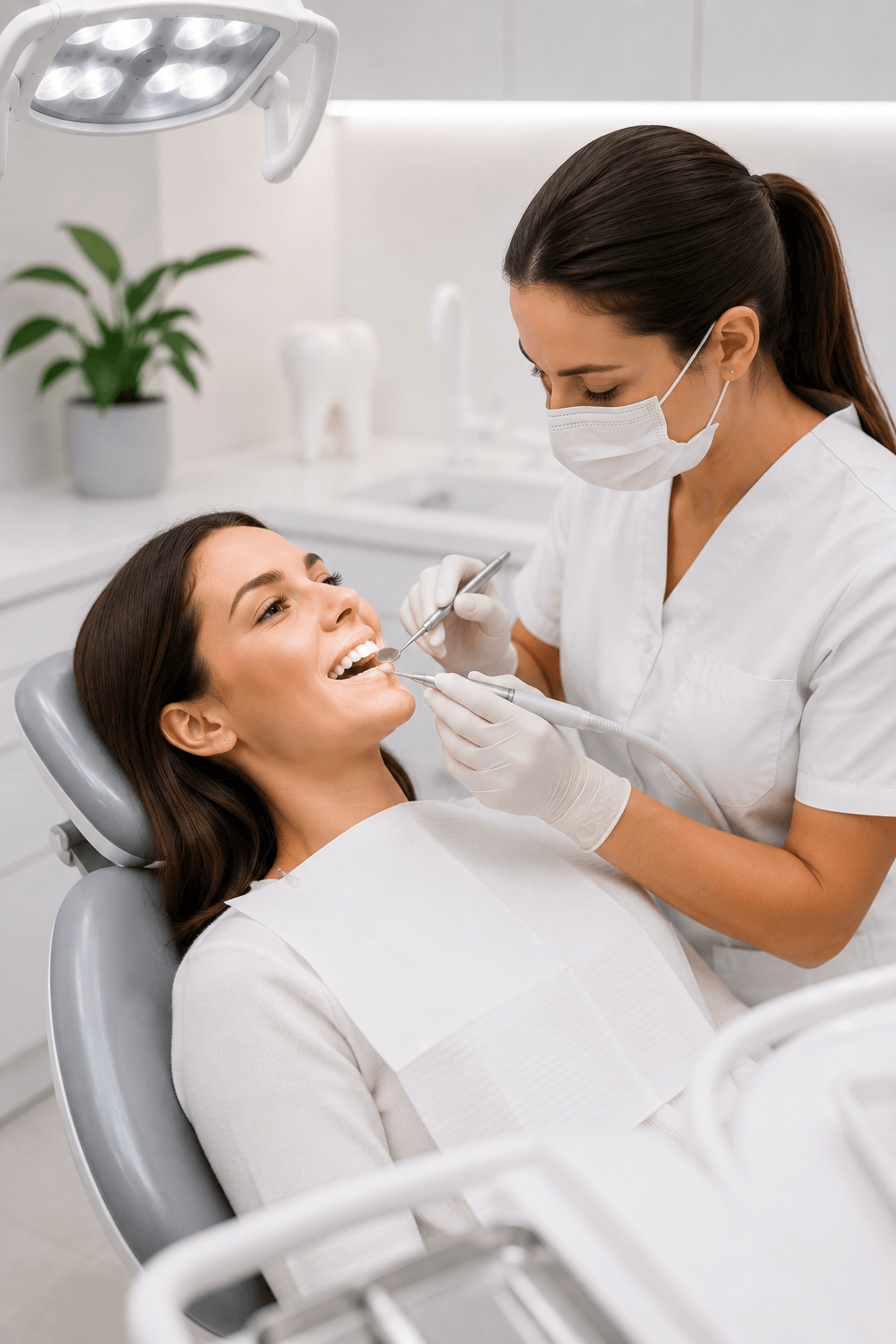
Even the best toothbrush cannot reach all hidden areas. We believe that prevention is the best cure. Our dental hygiene therapy not only removes plaque and tartar, but also protects your gums from inflammation, bleeding, and periodontitis.
Our Methods
• Ultrasonic Cleaning: Effective removal of hard deposits above and below the gumline. We use high quality ultrasonic instruments.
• Airflow Therapy: Air polishing with a fine jet of water and powder that gently lifts stains from coffee, tea, and tobacco, restoring your teeth's natural shine.
• Periodontal Diagnostics: Thanks to Planmeca 3D imaging, we can monitor the bone health around your teeth and detect early signs of periodontitis.
What Are Dental Plaque and Tartar?
Dental plaque is a biofilm made of food residue and bacteria. If not removed in a timely manner, saliva causes the plaque to calcify and turn into tartar. Tartar adheres firmly to the teeth and cannot be brushed away with a standard toothbrush, requiring professional removal. It accumulates both above and below the gumline, where it cannot be seen or cleaned at home. This makes professional oral hygiene essential. After tartar removal, it is crucial to polish the teeth to prevent new plaque from building up quickly.
Everyone builds up tartar at a different rate, depending on saliva composition, hygiene habits, diet, and orthodontic alignment. We recommend a professional oral hygiene treatment once a year as part of your routine check-up. For patients at higher risk of tartar buildup or periodontal disease, more frequent visits may be needed.
We recommend avoiding cigarettes, food, and beverages (except water) for two hours following the procedure. Immediately after a professional cleaning, teeth are more susceptible to staining because the natural protective film created by saliva has been removed. It takes about two hours for this film to fully restore.
Let's be honest — it's not the most enjoyable experience, but it is very manageable! With regular visits, there is almost no discomfort during the procedure. However, if tartar has built up over many years, it binds tightly to the tooth surfaces, making removal a bit more involved and lengthy.