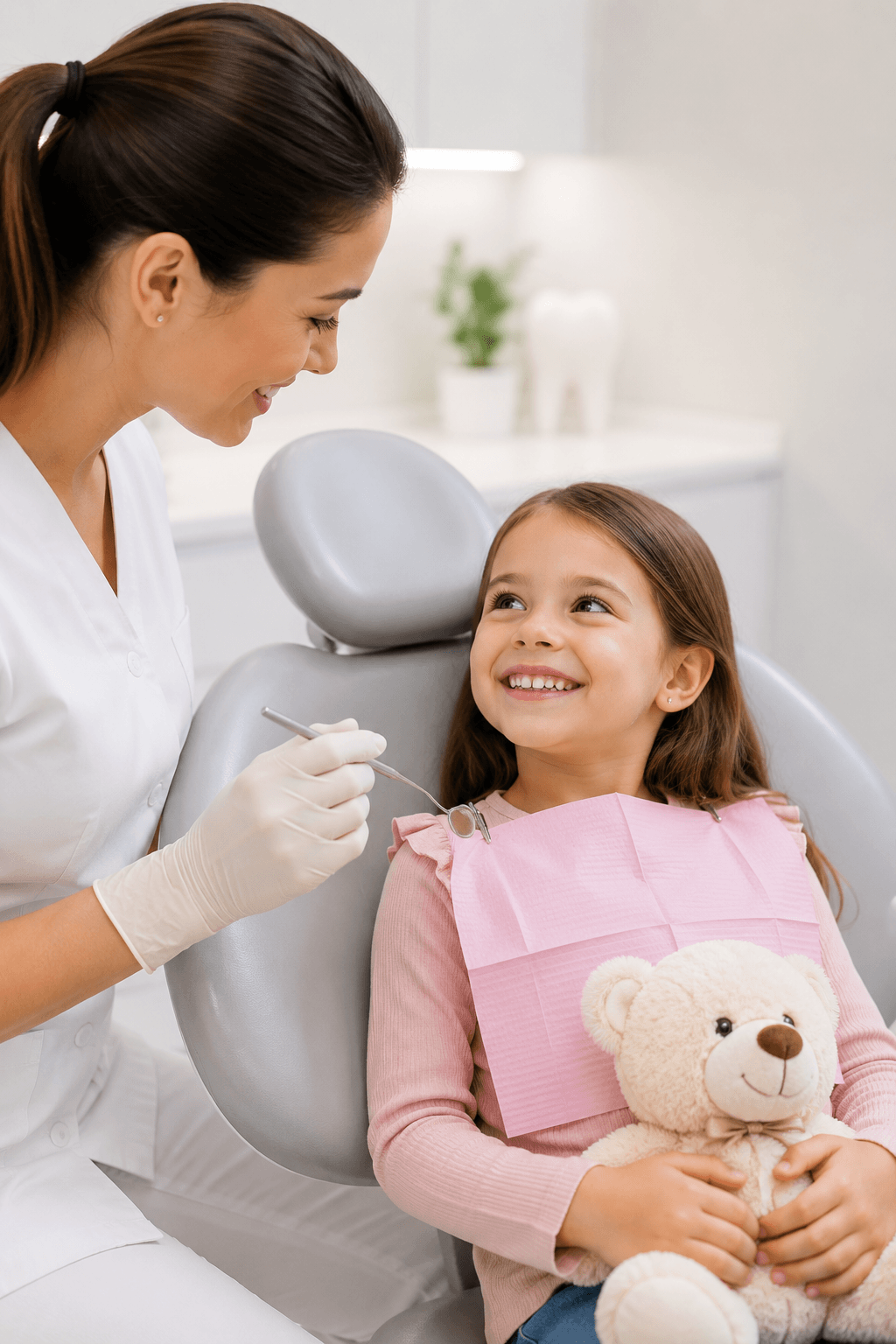
We know that a child's first dental visit shapes their attitude toward dental health for a lifetime. We take the time to get to know our little heroes, explain everything through play, and use the gentlest methods to turn every check-up into a fun adventure.
What We Offer for Children
- Prevention & Oral Hygiene Education: During routine check-ups, we teach children and parents how to brush properly through fun demonstrations.
- Sealants (Silanization): A protective coating applied to permanent teeth to prevent cavities.
- Treatment of Primary & Permanent Teeth: Painless, minimally invasive restoration techniques using age-appropriate materials.
- Primary Tooth Extraction: Handled gently through play, only when strictly necessary.
Why Should Primary (Baby) Teeth Be Treated?
Primary teeth play many vital roles until it is time for permanent teeth to emerge:
- They preserve space for permanent teeth, preventing or reducing orthodontic issues.
- They ensure proper chewing and nutrition.
- They aid in correct speech development.
- Their appearance is important for a child's confident, beautiful smile.
If left untreated, decayed baby teeth can damage developing permanent tooth buds, cause bite problems, and affect proper eating.
What Are Dental Sealants?
A quick, painless procedure requiring no drilling, used to seal the deep grooves (fissures) on the chewing surfaces of molars. This protects teeth from decay by creating a smooth surface that stops food particles and bacteria from getting trapped. The first few years after a permanent molar erupts carry the highest risk for caries because it often goes unnoticed and is harder to clean due to its back position. The ideal time for sealants is within two years after eruption.
• Primary Teeth Eruption Chart (from folder)
• Permanent Teeth Eruption Chart (from folder)
We recommend scheduling the first routine check-up around 1 to 1.5 years of age.
Routine check-ups are recommended every 6 months to detect and treat cavities early.
Avoid talking about negative dental experiences at home. Never use dental visits as a threat or force the child; instead, frame going to the clinic as a rewarding experience to look forward to. In our practice, we treat our youngest patients with patience and explain everything with a smile in language they can easily understand to build long-term trust.
- Brush teeth morning and night with an age-appropriate toothbrush and toothpaste.
- Limit sugary foods and drinks.
- Schedule regular check-ups, motivation, and oral hygiene instruction.
- Utilize professional preventive procedures such as fluoridation, dental sealants, and professional cleaning.